

 Deutsch
Active Laser Beam Stabilization
Adjustment, stabilization, positioning and alignment of laser beams
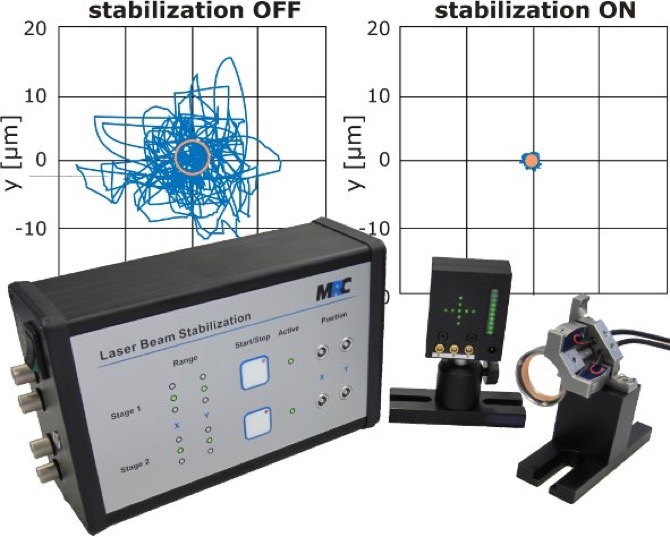
We offer systems for the real-time stabilization, alignment, positioning and adjustment of laser beams. Our systems are extremely precise, fast and very stable. User interactions are not required. They are equipped with useful operation and safety features for a fast integration into different laser setups.
With our beam stabilization systems the laser is always stabilised in the desired target position and beam direction. Please don't hesitate to contact us. We are looking forward to assist you in selection, planning and integration.
Typical applications
- Very precise, fast and reliable beam alignment
- Active beam position and beam direction control
- Compensation of laser beam pointing
- Precise motion and vibration control
- Automated adjustment of laser beams
- Fast delivery of laser beams to changing applications
- OEM solutions: e.g. inline precision control in laser materials processing
Further information
All products are directly available from us.
For further information or to get a quotation please give us a call or send an email.
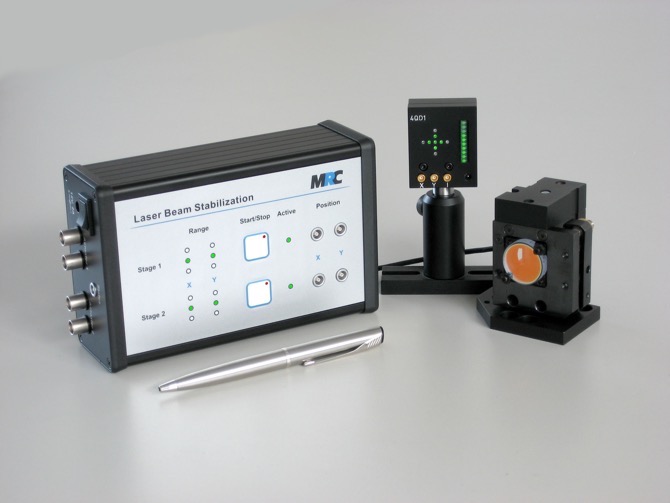
Stand-alone system for an easy installation to the laser beam path. It is characterized by its straightforward handling and integration. The Compact system leads to a reliable and very precise beam position and direction stability and it compensates disturbances. The Piezo actuated mirrors can placed at positions of existing mirrors of the setup.
Product information
Features
- Active closed-loop control
- Analog system core for highest control performance with lowest phase-shift
- Highest resolution without digitizing steps
- No user interactions required, no need for a computer
- USB interface (Ethernet, RS-232) and software available
- Precise positioning of cw and pulsed lasers
- Also applicable for ultrashort pulsed lasers (ps, fs)
- OEM versions available
- Excellent price performance ratio
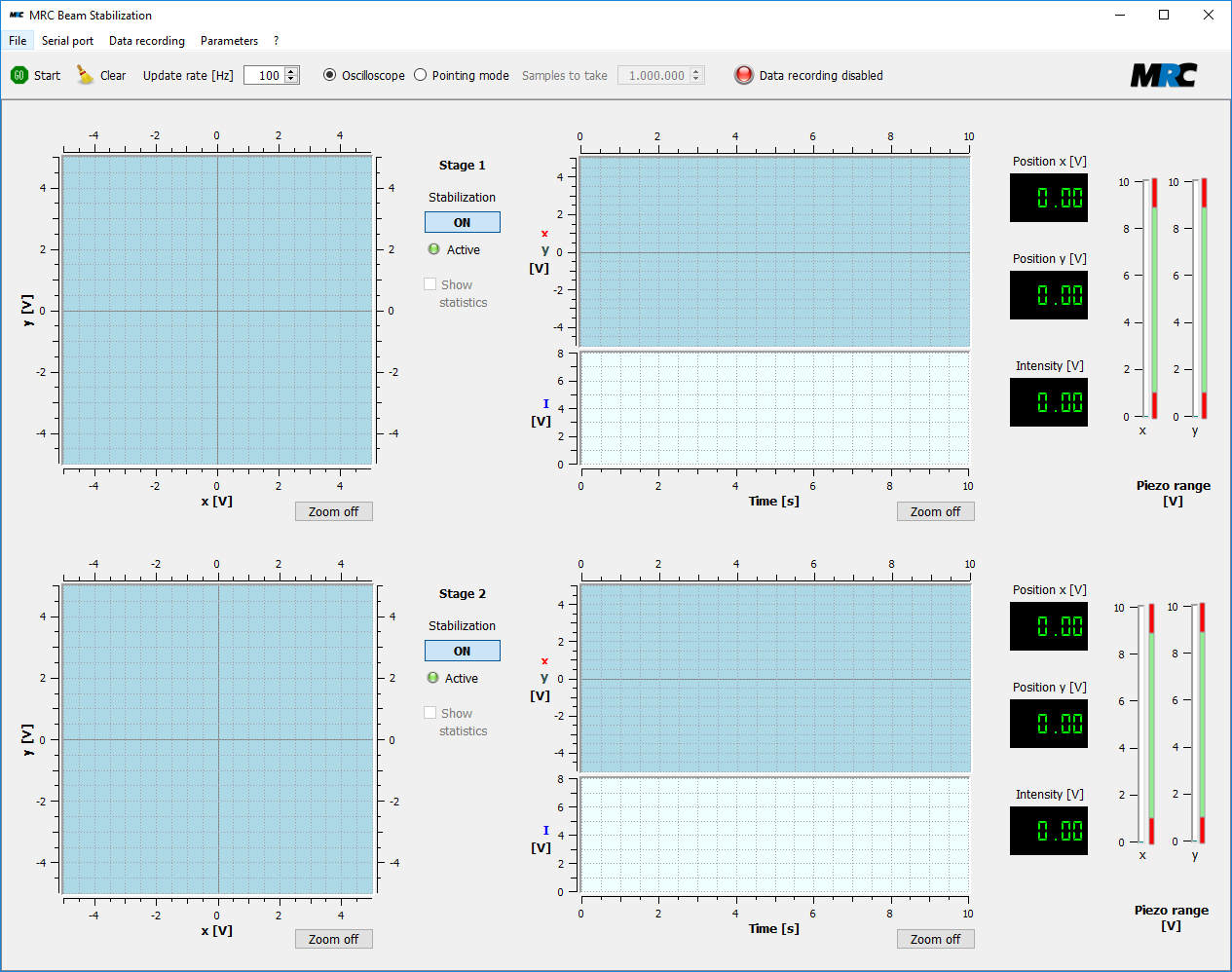
The Compact laser beam stabilization system can optionally be equipped with a serial interface. It allows the setting of parameters and the read-out of values. The communication runs via USB. As alternatives, Ethernet or RS-232 are also available. The associated software makes use of this interface and communicates with the stabilization system. It offers real-time displays of the positions, intensities, and piezo voltages and includes some functions to control the stabilization system.
Product information
Download
Software for one system
Software for multiple systems
Detectors for the "Compact" system
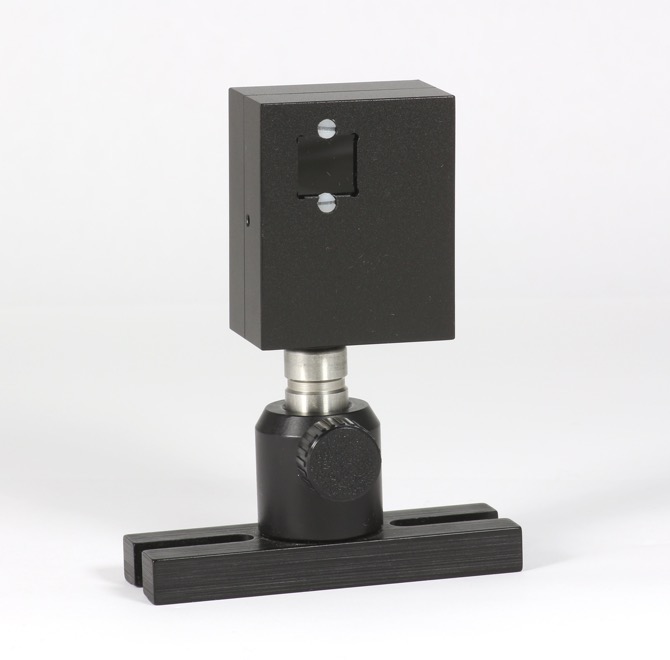
All our detectors are developed for the perfect combination with the "Compact" system. We can offer the ideal detector for each application and laser. Our most common models are shown below.
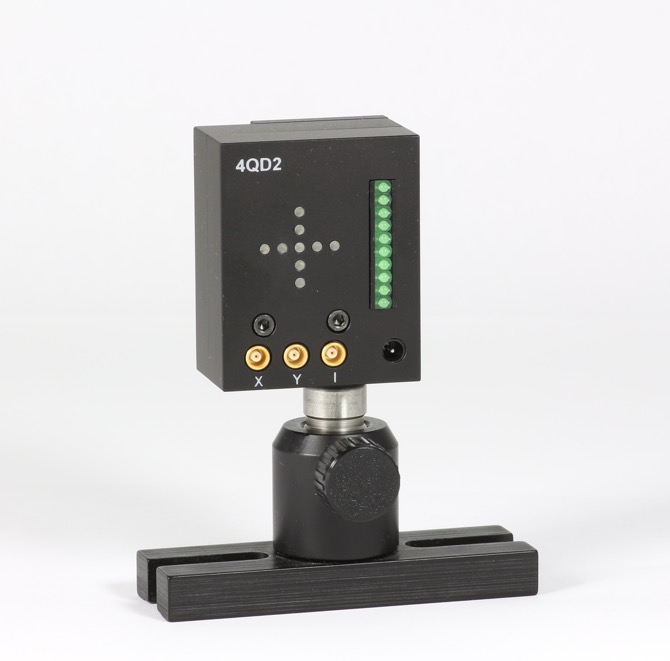
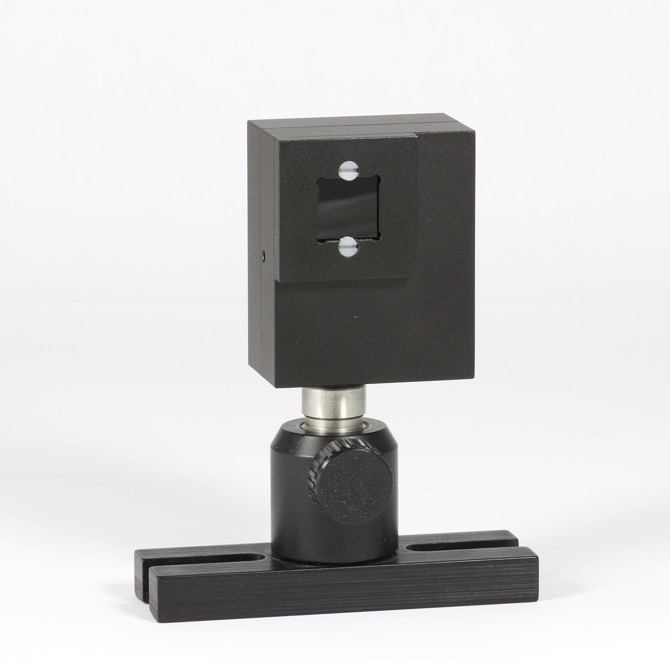
vis 4QD detector
- System detector with Si 4-quadrant diode
- Wavelengths: 320 - 1,100 nm
- Active sensor area: 10 x 10 mm2
- Lateral resolution: < 100 nm possible
- Bandwidth: up to 100kHz
- Data sheet: 4-quadrant detectors
vis PSD detector
- System detector with position sensitive device sensor (PSD)
- Wavelengths: 320 - 1,100 nm
- Continuous sensor area
- Electronic shifting of laser target position possible
- Position measurement independent of beam diameter
- Data sheet: PSD detector
- Large dynamic range (factor >1000), reliable detection even with changing laser intensities
- Logarithmic signal amplification
- Signal-to-noise ratio constant over the whole intensity range
- For wavelengths, lateral resolution and bandwidths see vis 4QD detector
- Data sheet: WID detector
UV 4QD detector 3x3
- System detector with Si PIN 4-quadrant diode
- Wavelengths: 190 - 1,000 nm
- Active sensor area: 3 x 3 mm2
- Lateral resolution: < 100 nm possible
- Bandwidth: up to 100 kHz
- Data sheet: 4-quadrant detectors
UV PSD detectors 4x4 or 10x10
- System detectors with UV PSD sensors
- Wavelengths: 190 - 1,000 nm
- Active sensor area: 4 x 4 mm2 or 10x10 mm2
- Lateral resolution: < 500 nm possible
- Bandwidth: up to 100 kHz
IR 4QD detector (InGaAs)
- System detector with InGaAs 4-quadrant diode
- Wavelengths: 900 - 1,700 nm
- Active sensor area: 3 mm diameter
- Lateral resolution: < 100 nm possible
- Bandwidth: up to 100 kHz
- Data sheet: 4-quadrant detectors
IR 4QD detector (Ge)
- System detector with Ge 4-quadrant diode
- Wavelengths: 800 - 2,000 nm
- Active sensor area: 5 x 5 mm2
- Lateral resolution: < 100 nm possible
- Bandwidth: up to 100 kHz
- Data sheet: 4-quadrant detectors
Actuated mirrors for the "Compact" system
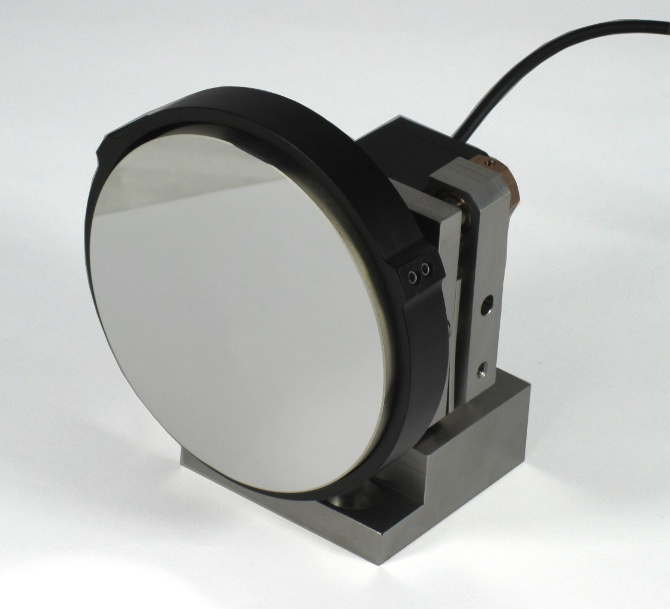
We offer different mirror actuators for the Compact system:
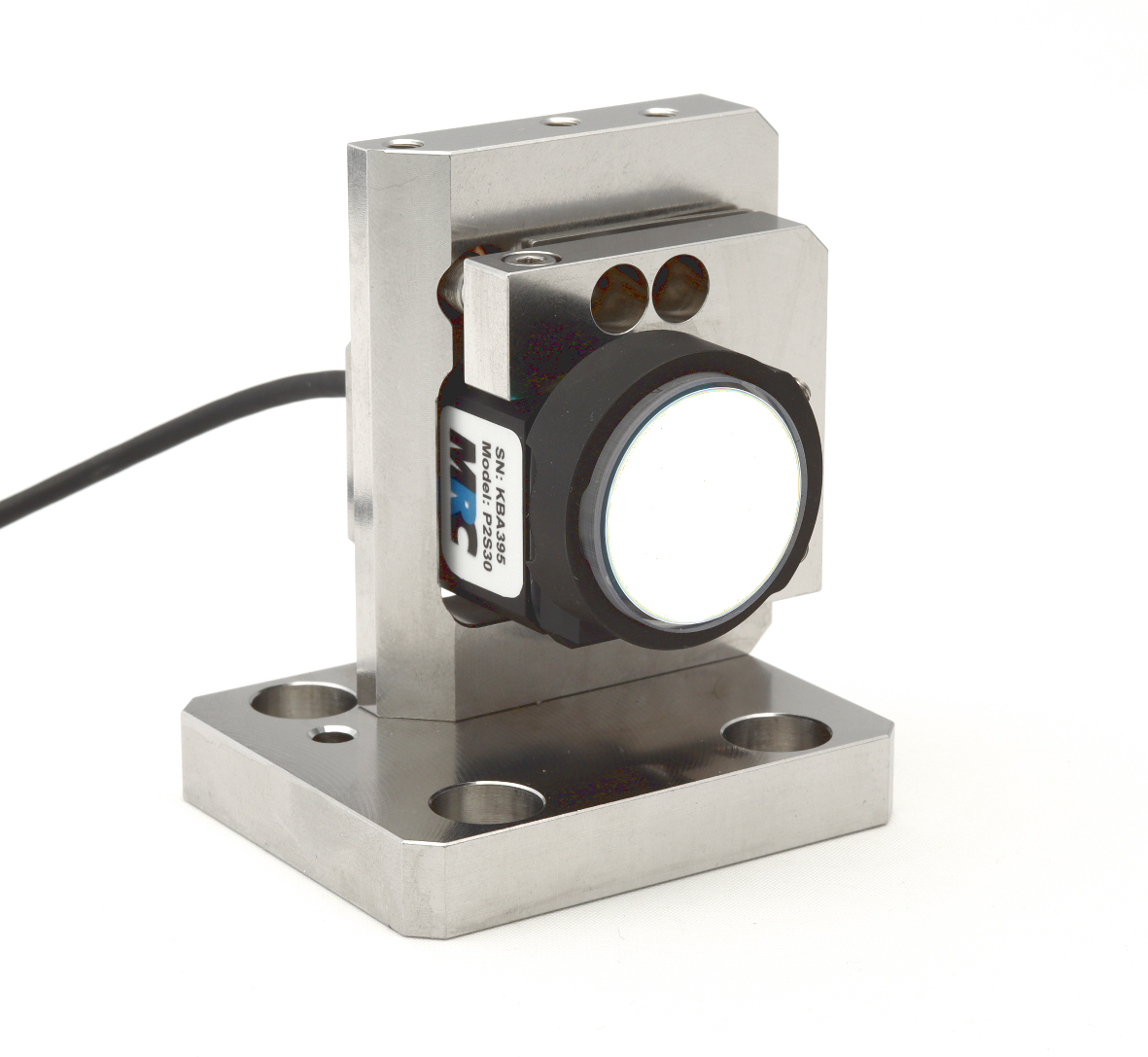
- Highest positioning accuracy and speed due to Piezo technology
- Resonance frequency up to 1,200 Hz
- Tilting range: 2 mrad mechanical, 4 mrad optical
- For 1 inch mirrors
- Detector can be placed behind the actuated mirror
- Data sheet: P2S30 Piezo steering mirror mount
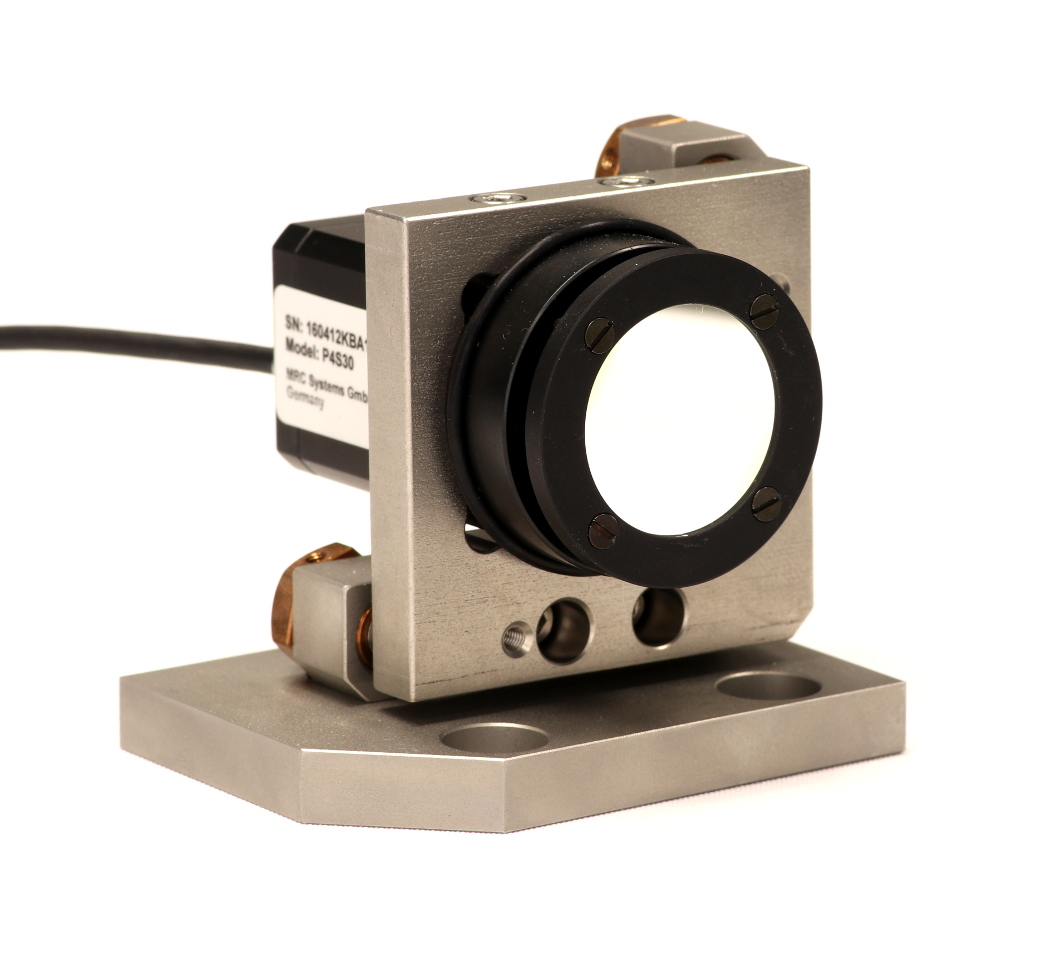
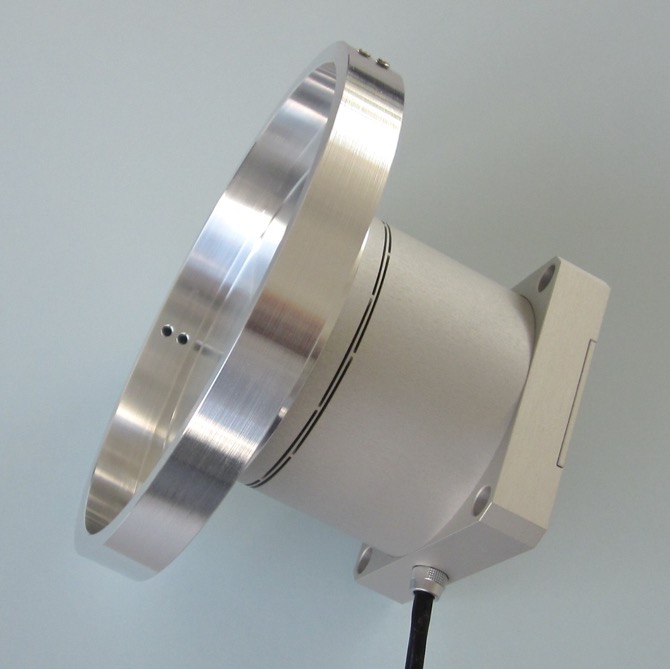
- Highest positioning accuracy and speed due to Piezo technology
- Resonance frequency up to 1,200 Hz
- Tilting range: 4 mrad mechanical, 8 mrad optical
- Recommended for larger mirrors
- For 1, 1.5, 2 and 3 inch mirrors
- Data sheet: P4S30 Piezo steering mirror mount
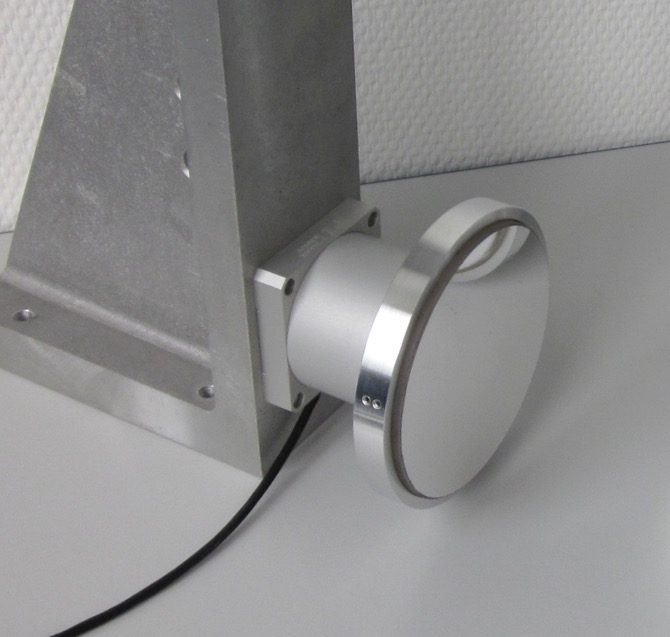
- Our "Compact" system can also control actuators for larger mirrors
- The image shows a Piezo actuator with a 4 inch mirror
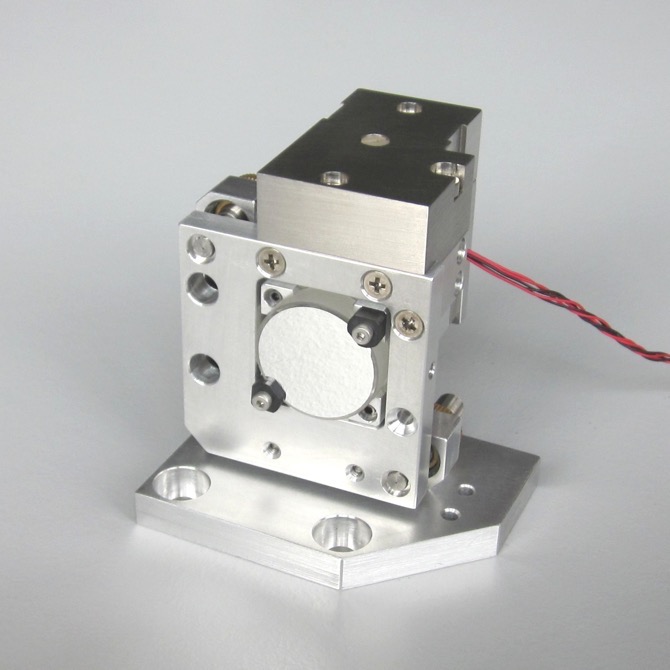
The "Compact" system can be used in vacuum applications. Thus we offer vacuum versions of the detectors and actuators. These components can be used down to a vacuum pressure of 10-11 mbar.
Laser shutter
The laser shutter system "Beamblock" is designed for the combination with the beam stabilization system, but can also be used independently. It consists of a laser shutter and a shutter control unit that enables different operation modes (external, confirm, manual). For further specification of the shutter and the shutter control unit see the user manual.
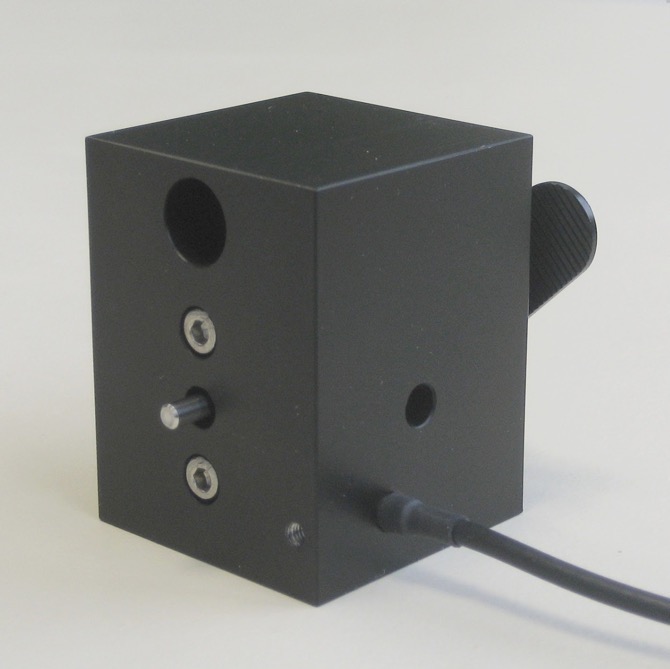
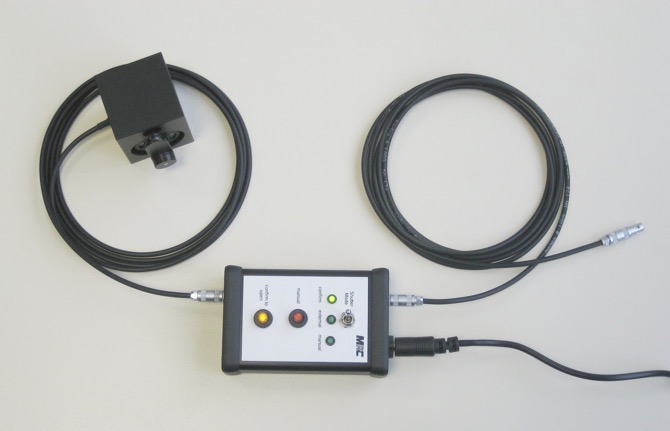
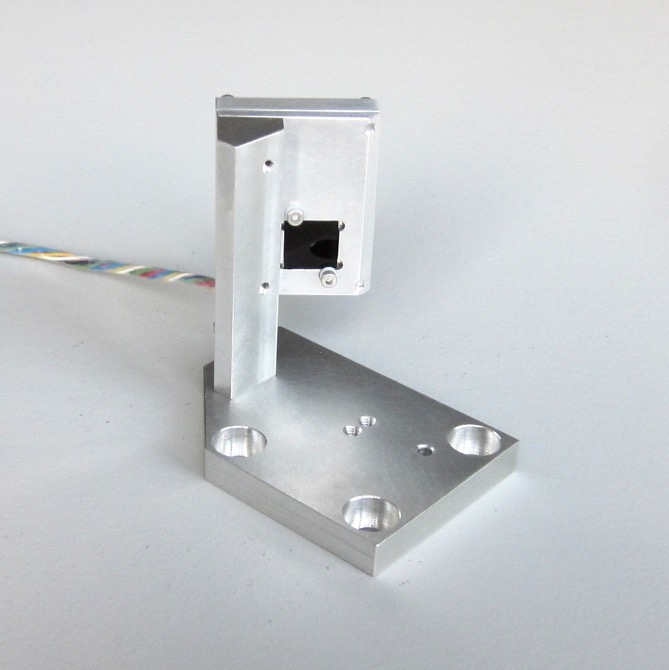
Beside the standard laser shutter we can also offer customised items. As an example, a miniature shutter is shown on the image below. It can be used if only limited space is available.
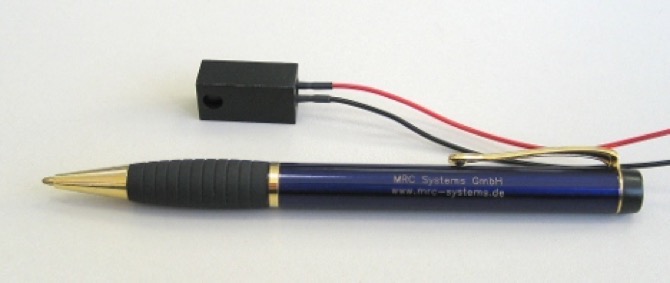
Further product information
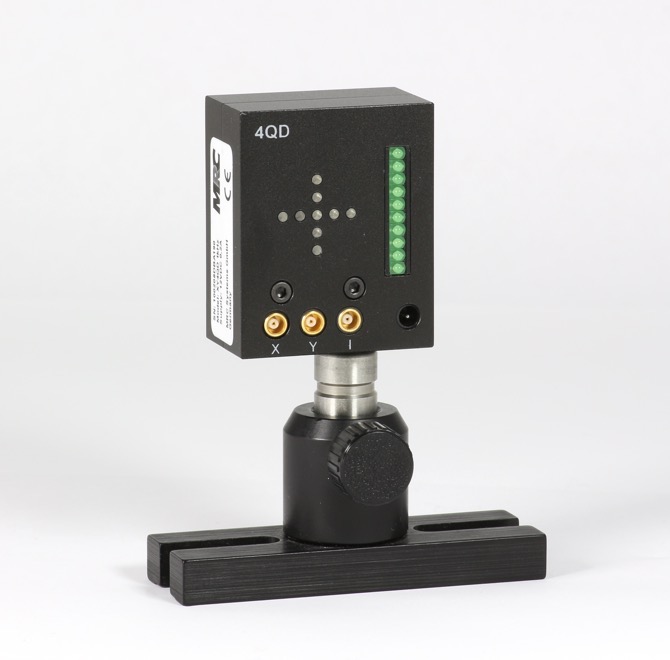
These detectors with integrated signal processing determine laser fluctuations with highest spatial and temporal resolution. The measuring principle allows for the inspection of single laser pulses. Thus, the position detectors enable the characterization and quality assurance of lasers. The detectors are equipped with LED displays for power level and x and y position.
The measurement bandwidth can be >100kHz. For further specifications see the user manuals.
Further product information
System descriptions
Here you can find some descriptions on how to use the Compact laser beam stabilization:
Data sheets
Here you can find the data sheets of the system components: